
The Rangihoua: A Moriori Waka Miheke
The ancient waka (canoe) discovered in 2024 at the mouth of the Rangihoua Stream on the northern coast of Rēkohu (Chatham Islands) strongly supports what Moriori have always known. This waka miheke is a sacred and physical connection between our karāpuna (ancestors) and Moriori today.
The waka embodies Moriori voyaging knowledge, cultural continuity and enduring relationships with the moana and henu. It carries our history and traditions forward for future generations and affirms Moriori oral histories of early ocean voyaging, settlement and adaptation on Rēkohu and Rangihaute, independent of later colonial narratives.
The Rangihoua Waka stands as a miheke in its own right, grounded in Moriori knowledge systems and tikane.
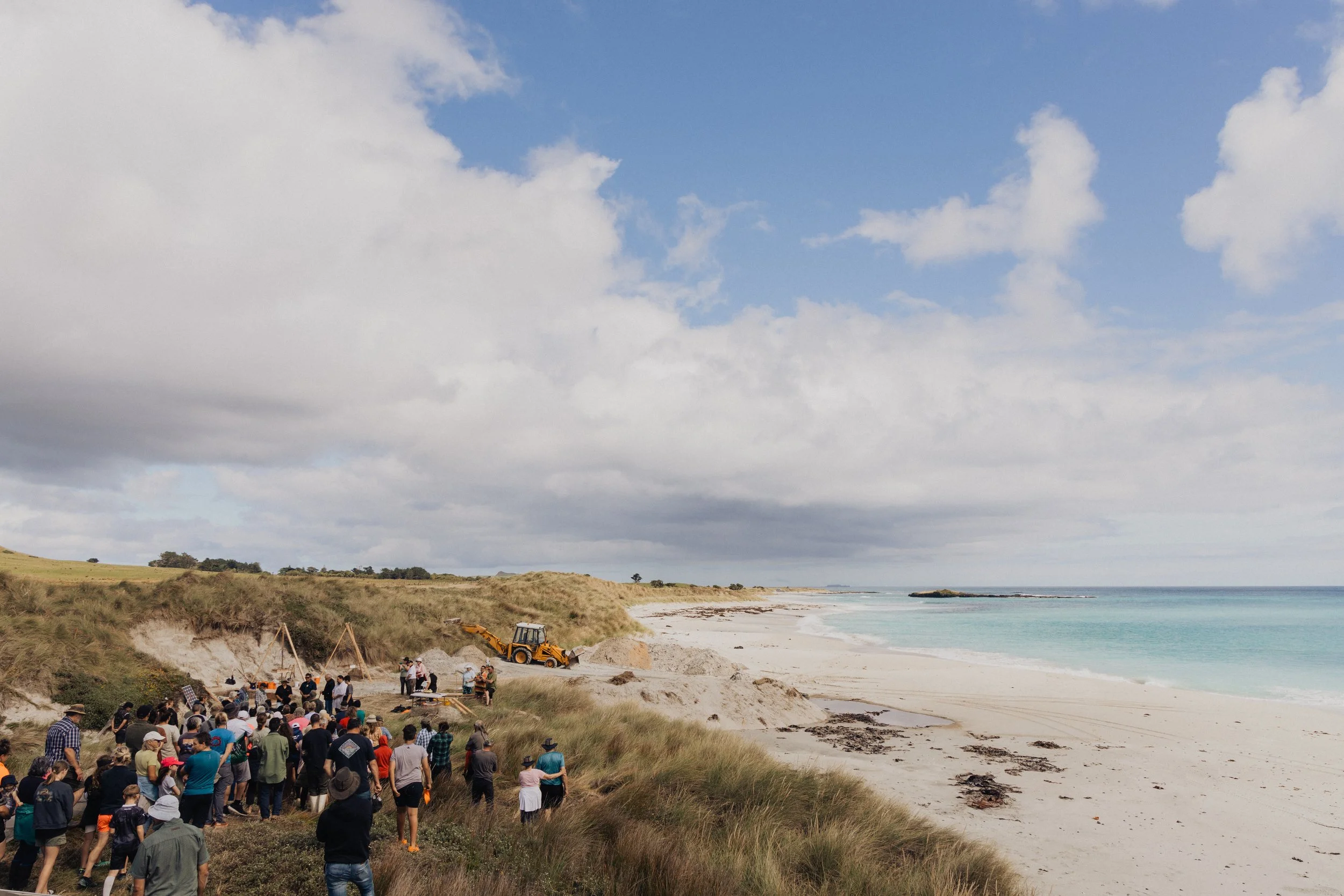
A public blessing of the waka site, held by local imi and iwi.
Location of the Discovery
The Rangihoua Waka was discovered at site CH744, located at the mouth of the Rangihoua Stream within a coastal area called Tē Tūtaitei Awanui. This area forms part of a wider, continuous Moriori archaeological and cultural landscape referred to as Site 100.
The landscape includes whare sites, shell middens, food preparation areas, and several kōimi or wāhi tchap’ (burial or sacred places). Because the area is so culturally important, this coastline was given a special statutory overlay protection for Moriori under the Moriori Claims Settlement Act 2021.
The presence of the waka within this protected cultural landscape reinforces its status as a miheke inextricably connected to Moriori arrival, ancestral occupation, and enduring relationship with this place.
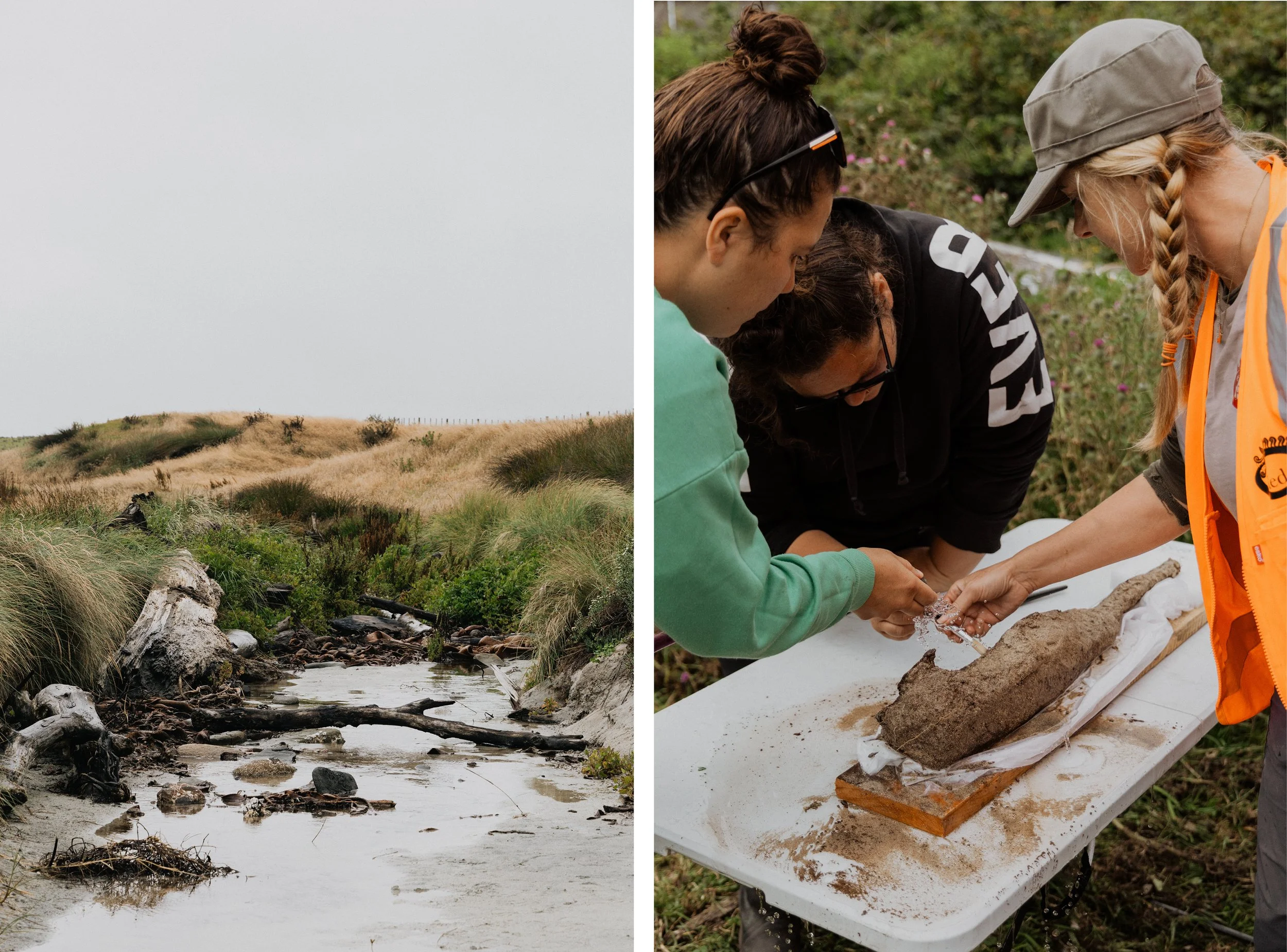
Left: The Rangihoua Stream where the waka was discovered in 2024.
Right: Dani McQuarrie and Heidi Lanauze delicately removing sand from a fragment of the waka, guided by conservator Sara Gainsford.
Alignment with Moriori History
Moriori traditional knowledge records multiple migration waves that shaped our settlement history on Rēkohu and Rangihaute. These arrivals are preserved through oral histories, place names, and cultural memory and are increasingly supported by archaeological evidence.
The FIRST ARRIVALS
Our traditions hold that the earliest karāpuna, led by Rongomaiwhenua and Rongomaitere, came directly to the islands from the Eastern/Central Pacific. These arrivals establish our rights as the waina pono (traditional inhabitants) of Rēkohu.
Moriori oral records place these first arrivals many centuries before the arrival of later waka migrations to Rēkohu, including the Rangimata and Rangihoua. These traditions underpin Moriori identity, authority, and enduring relationships with the henu and moana.
THE SECOND ARRIVALS
Many years later, approximately 29 generations (according to Maikoua), Kahu arrived on Rēkohu. After failing to cultivate crops, Kahu and his people left Rēkohu, though some may have remained (Shand, 1894).
THE RANGIMATA AND RANGIHOUA VOYAGES
A later migration involved two large, double-hulled waka, the Rangimata and Rangihoua, which departed Hhiawaiki (Hawaiki) to escape ongoing conflict. The arrival of these waka marked the end of the Ko Matangi Ao period (ancient knowledge brought with them from Hhiawaiki) and the beginning of Hokorong’ Tīring’ (the time of the 'Hearing of the Ears' which post-dates the arrival at Rēkohu).
Traditional accounts state that the Rangihoua was ill-prepared and unfinished when it left, and was swiftly smashed up by rough winds upon reaching the northern coast. This wreckage occurred near or on the site where the CH744 vessel was located.
Radiocarbon dating of a short-lived fibre sample provides a strong time context for the waka. The majority of the dated fibres indicate a growth date around 1440–1470 AD (Maxwell, 2025, para 151). However, it is crucial to note that almost all the dated materials, including fibres, cordage, and rope, are short-lived materials that would have been replaced throughout the life of the vessel (Maxwell, 2025, para 152).
These findings align with Moriori traditions that place the arrival of Rangimata and the wrecking of Rangihoua at approximately 800 years ago.
THE OROPUKE ARRIVAL
A further waka, Oropuke, arrived from Hhiawaiki approximately one generation later. This arrival aligns with Moriori traditions of voyaging connections and reinforces the sequence of Moriori migrations.
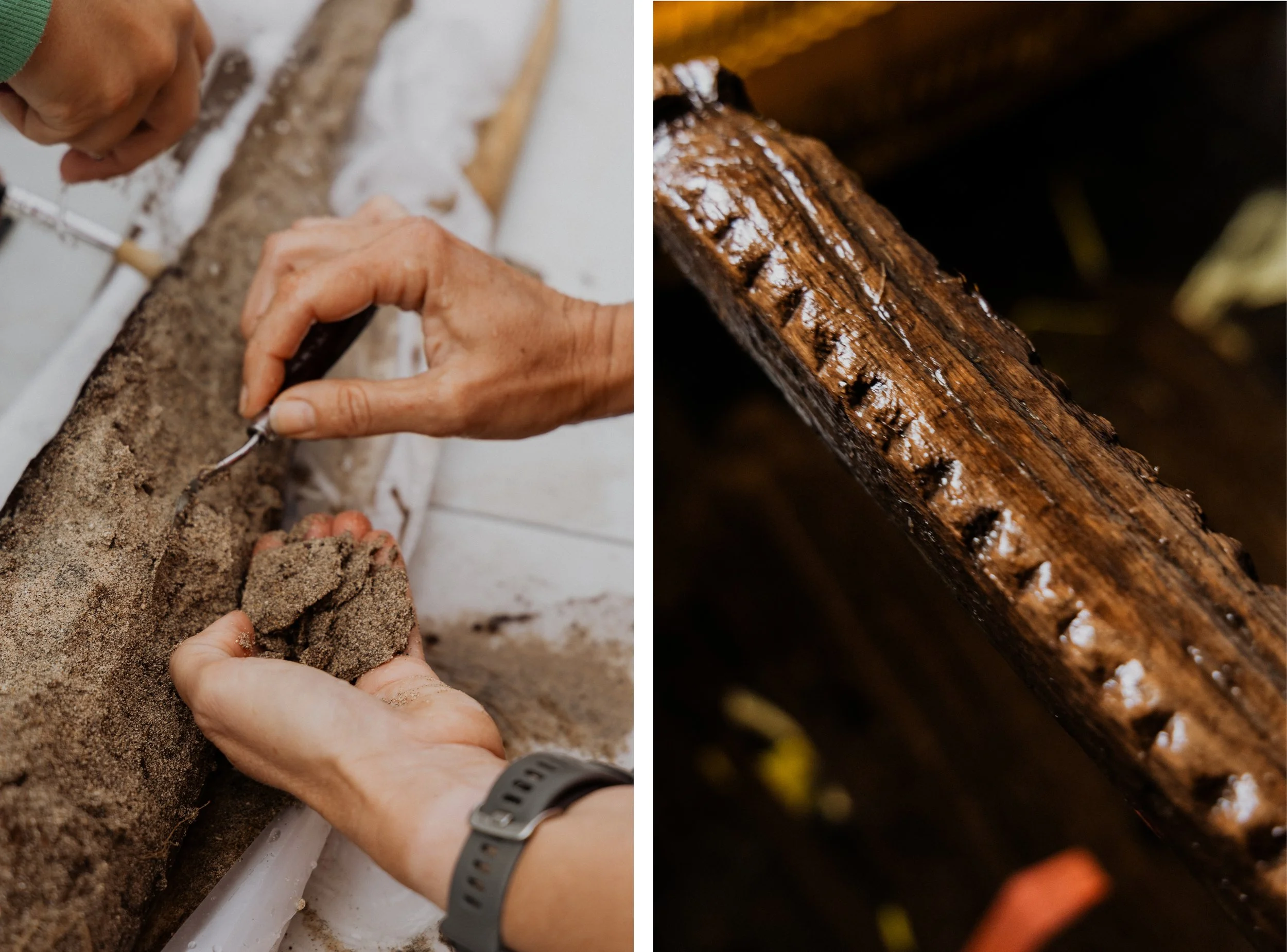
Left: Conservator Sara Gainsford removing sand from a recovered piece of the waka.
Right: A recovered section of the waka revealing its distinctive notched edges.
Scientific Evidence and Traditional Knowledge
Archaeological assessment and interim radiocarbon dating provides scientific validation for the Moriori accounts of ancestral settlement and waka technology.
Earlier material was also found during the excavation, including a piece of rope pre-dating 1415 AD, and a bottle gourd (the first known found on Rēkohu). The interim report indicates that the gourd may pre-date 1400 AD (Maxwell, 2025, para 151).
The Project Archaeologist has noted that the waka itself may be considerably older than the dates derived from these perishable associated materials (Maxwell, 2025, para 152). This scientific caveat supports the Moriori traditional knowledge that the waka may be over 800 years old.
Waka Technology and Moriori Artistry
Physical evidence from the excavation reveals unique construction and carving styles highly indicative of Moriori cultural provenance.
The tested timbers are identified as being of New Zealand origin. Based on the thickness of a triangular timber fragment (thought to be a stern or bow cover), va’a builder Heemi Eruera, drawing on traditional waka knowledge, has estimated that the vessel may have been at least 20 metres long. This size aligns with Moriori traditions of large voyaging waka capable of carrying up to 50 people.
The excavated components include elaborate carved timbers with inset obsidian discs.
Distinctive Moriori Design
The carvings and construction techniques feature motifs characteristic of Moriori artistic traditions.
Bird forms, often seen in rākau momori (tree engravings) and ceremonial items like the albatross-shaped patu hopo, are present. Long, slender bird-head pieces with distinctive notching have been recovered from the site.
Notching along the edges of wooden components is a salient feature of Moriori art, also seen on whare carvings and wooden miheke, carved waka prows and bone and stone tools. This technique was functional in securing bindings in waka construction, and possibly served as a material mnemonic device for reciting hokopapa (genealogy).
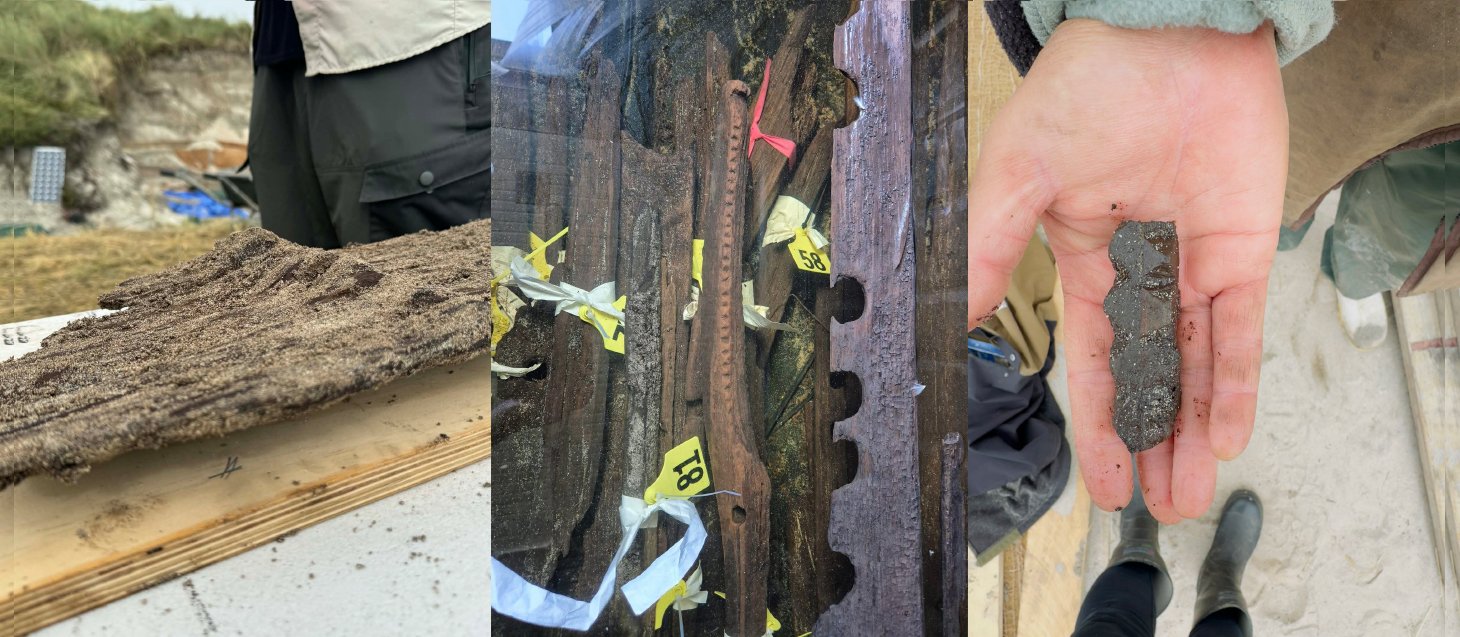
Images supplied by Heidi Lanauze
Cultural Significance
The discovery of the Rangihoua Waka at the mouth of the Rangihoua Stream affirms Moriori oral traditions. The place name itself carries this history, reflecting how Moriori karāpuna embedded memory within the landscape.
Archaeological science does not replace Moriori knowledge but supports and strengthens understanding that hokopapa and stories about our karāpuna accurately show Moriori voyaging, settlement and our long connection to Rēkohu and the land itself (for archaeological recording purposes, the site at which the Rangihoua Waka was located and documented is designated CH744).
The waka embodies Moriori innovation, resilience and tikane. It demonstrates that Moriori knowledge and science are not separate domains but interconnected ways of understanding our world. Modern archaeological science gives tangible form to what our ancestors have always known and which they passed down to their present day descendants.
Rangihoua Waka stands as enduring evidence of Moriori presence, rangatiratanga and relationship with Rēkohu that exists independently of later colonial processes.
Tikane Moriori and Rangatiratanga
For Moriori, the Rangihoua Waka is not simply an archaeological artefact but a miheke with its own cultural status and hokopapa. Under tikane Moriori, miheke are treated as taonga tuku iho that carry ancestral presence and responsibility.
Moriori have recognised cultural interests and responsibilities in relation to the waka under tikane Moriori and through the statutory cultural overlay that applies to this place. While the Crown retains interim legal and administrative responsibilities, Moriori involvement and values inform how the waka is approached, cared for, and protected.
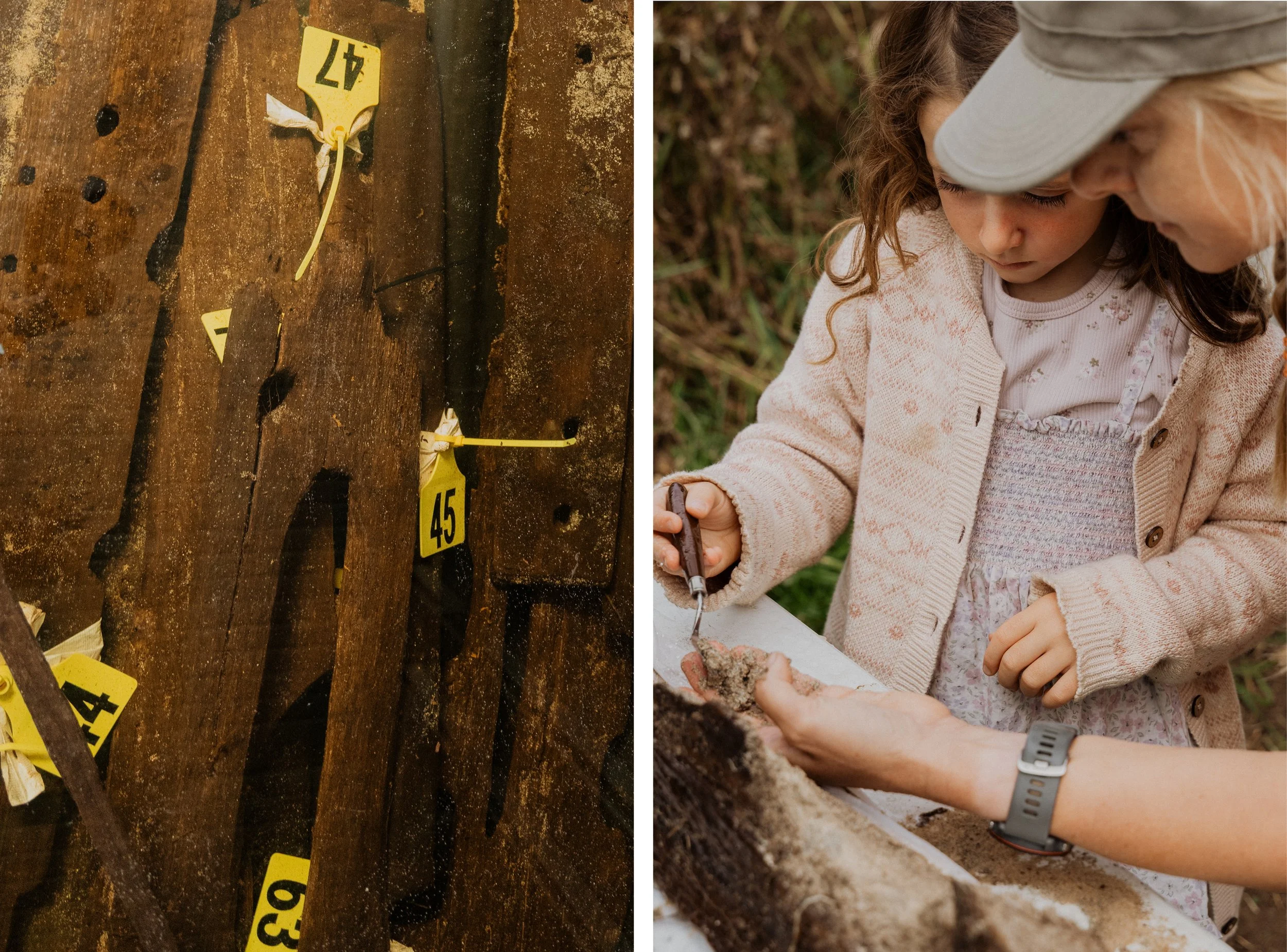
Left: Larger pieces of the waka, carefully tagged and catalogued.
Right: Tchimirik Rosie Ryan assisting conservator Sara Gainsford with removing sand from a recovered piece of the waka.
Current Status
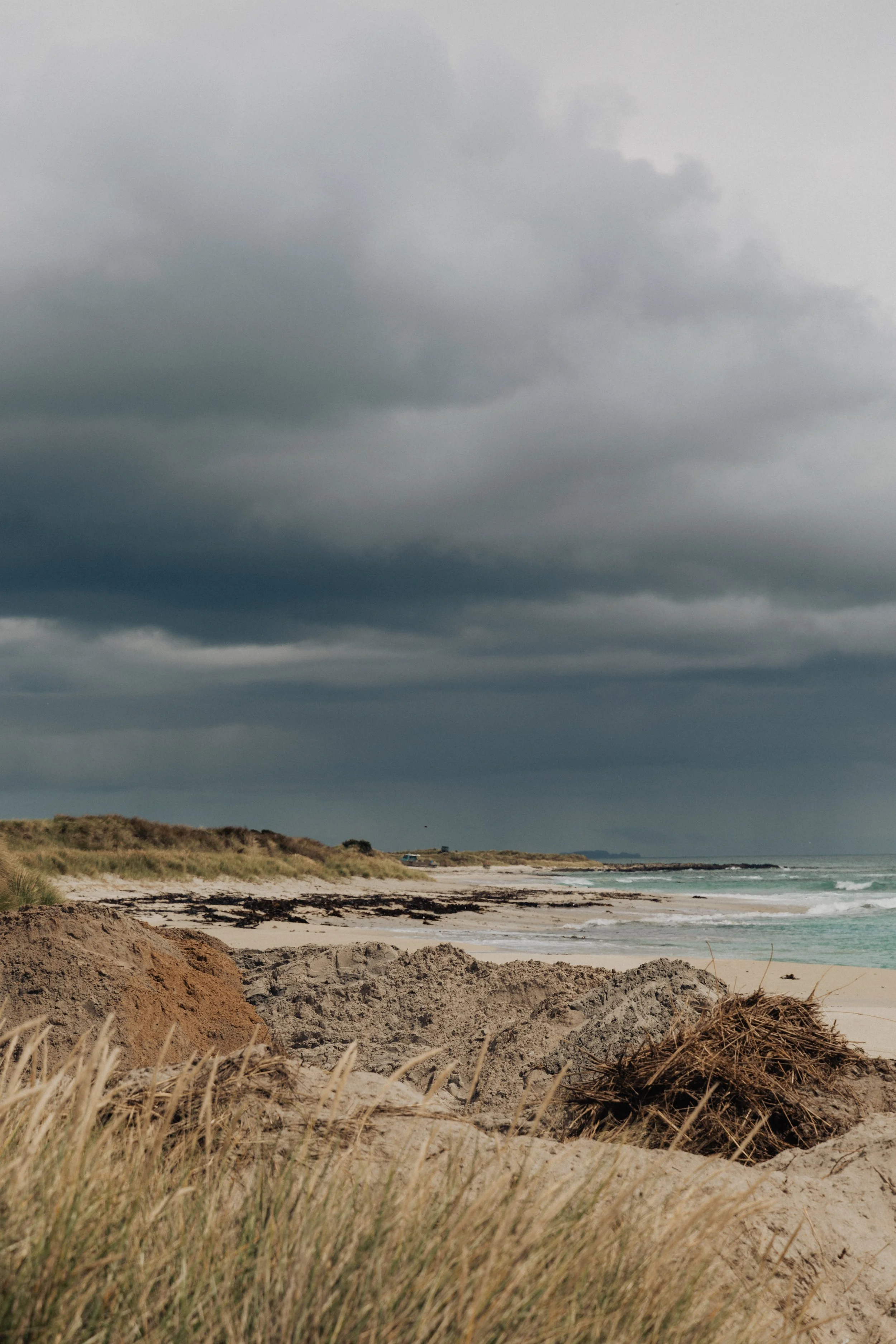
The Rangihoua Waka is located on land owned and administered by the Department of Conservation and, at this stage, the Crown holds prima facie ownership of the waka. Only part of the waka has been excavated to date.
The Crown has advised that it does not have funding available to complete the excavation. In response, Moriori have stepped forward to fund the next phase of work so that the waka can be carefully excavated, protected, and studied in accordance with professional standards and Moriori values.
Care, Protection, and Future Management
The long-term care of the Rangihoua Waka must address both physical preservation and cultural integrity.
For Moriori, appropriate care involves not only technical conservation measures, but also respect for the waka’s spiritual, historical, and relational dimensions. Preservation is understood not simply as preventing physical deterioration, but as maintaining the mana and cultural meaning of the miheke for present and future generations.
Future management of the waka should therefore be guided by Moriori values and cultural considerations, and undertaken in collaboration with the local community of Rēkohu, archaeologists, conservators, and other relevant specialists. This collaborative approach will support appropriate handling, storage, access, and interpretation, and includes consideration of where and how the waka is held, who may engage with it, and how knowledge associated with it is shared.
The Rangihoua Waka is located on land owned and administered by the Department of Conservation.